
Best Pre Nursery Activities for Early Learning and Brain Development
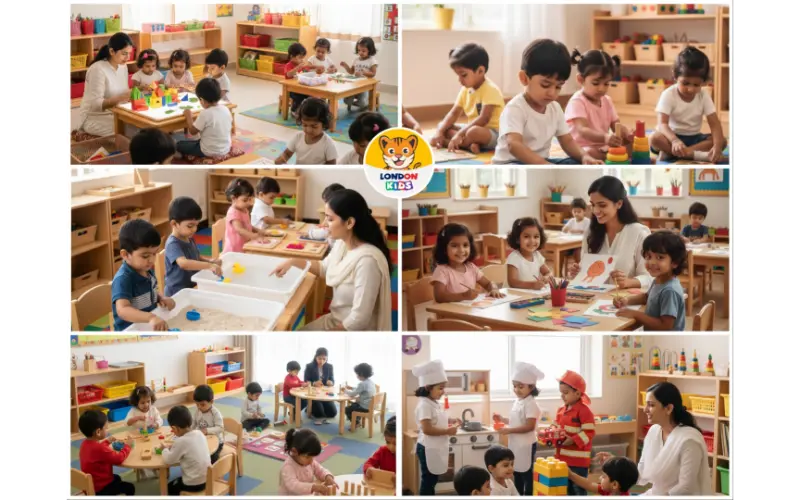
The early years of a child’s life are full of curiosity, energy, and rapid brain growth. During this stage, children learn best when learning feels fun, safe, and natural. This is where pre-nursery activities play a very important role.
Pre-nursery activities are carefully designed learning experiences that help young children explore the world around them through play, movement, and interaction. At London Kids Preschool, these activities are thoughtfully planned to support early learning and brain development in a joyful way.
Introduction to Pre-Nursery Activities
Pre-nursery activities are simple, age-appropriate tasks designed for children between the ages of 2 and 4 years. These activities focus on learning through play rather than formal teaching.
Instead of books and memorization, children learn through:
Games and music
Storytelling and rhymes
Art, craft, and movement
Hands-on and sensory experiences
This playful approach helps children stay engaged and curious while building a strong foundation for future learning.
Why Pre-Nursery Activities Matter for Early Learning
Young children learn differently from older kids. Their brains develop faster when they can see, touch, move, and explore. Pre-nursery activities help children:
Improve attention and focus
Develop curiosity and creativity
Build confidence and independence
Enjoy learning without pressure
When learning is enjoyable, children are more open to new ideas and experiences.
How Pre-Nursery Activities Support Brain Development
Cognitive Development Through Play
Simple activities like puzzles, matching games, and sorting objects help children
think and solve problems. These activities improve:
Memory and attention
Problem-solving skills
Logical thinking
Play-based cognitive activities help the brain create strong learning connections.
Sensory Stimulation and Brain Growth
Memory and attention
Problem-solving skills
Logical thinking
Sensory activities involve touch, sound, sight, and movement. Playing with clay, listening to music, or exploring textures helps the brain grow and develop faster.
Sensory play strengthens:
Brain connections
Emotional control
Focus and calmness
This is why sensory activities are a key part of early childhood education.
Types of Pre-Nursery Activities for Holistic Development
Fine Motor Skills Activities
Fine motor activities help children use their small hand and finger muscles. These activities include:
Drawing and coloring
Clay modeling
Bead threading
Paper tearing and pasting
These tasks improve hand strength and prepare children for writing later.
Gross Motor Skills Activities
Gross motor activities involve big body movements. Running, jumping, dancing, and balancing help children:
Build physical strength
Improve coordination and balance
Release energy in a healthy way
Outdoor play is especially important for physical and emotional development.
Language and Communication Activities
Songs, rhymes, storytelling, and picture reading help children learn new words and express themselves. These activities improve:
Vocabulary
Pronunciation
Listening and speaking confidence
At London Kids, communication is encouraged through interaction, not memorization.
Social and Emotional Development Activities
Group play and role-play activities teach children how to:
Share and take turns
Express emotions
Build friendships
Develop empathy
These skills help children feel confident and comfortable in a classroom environment.
Activity-Based and Play-Based Learning in Pre-Nursery
Activity-based and play-based learning focus on learning by doing. Children explore concepts through real experiences instead of passive listening.
Benefits include:
Better understanding of concepts
Stronger memory and retention
Higher interest in learning
Reduced learning pressure
This approach creates a positive learning experience that children enjoy every day.
Indoor and Outdoor Pre-Nursery Activities
Indoor Learning Activities
Indoor activities include:
Art and craft
Music and movement
Story time
Puzzle and block play
These activities help children stay focused while learning in a safe environment.
Outdoor Learning Activities
Outdoor play allows children to explore freely and build physical strength. Activities like running, climbing, and group games improve:
Motor skills
Social interaction
Emotional balance
Outdoor learning also helps children connect with nature.
How Pre-Nursery Activities Prepare Children for School
Children who participate in structured pre-nursery activities:
Adjust easily to school routines
Show better classroom behavior
Develop early academic readiness
Feel confident and independent
These skills make the transition to nursery and kindergarten smoother.
Role of Teachers in Guiding Pre-Nursery Activities
Teachers play a key role in early learning. Trained educators observe, guide, and encourage children during activities without forcing learning.
At London Kids Preschool, teachers are trained to:
Understand each child’s learning pace
Encourage participation gently
Create a safe and joyful learning space
How London Kids Designs Pre-Nursery Activities
London Kids follows a well-structured approach to pre-nursery learning through:
UK-based Edwell K5 curriculum
EYFS and Montessori principles
Activity-based daily planners
Trained and certified teachers
Safe and child-friendly classrooms
This ensures balanced development and consistent learning quality across centers.
Tips for Parents to Support Pre-Nursery Learning at Home
Parents can support learning by:
Reading stories daily
Encouraging free play
Talking and listening to children
Avoiding pressure or comparison
Simple daily interactions can make a big difference in early learning.
Conclusion
Pre-nursery activities play a vital role in early learning and brain development. Through play, interaction, and hands-on experiences, children grow emotionally, socially, physically, and cognitively.
At London Kids Preschool, pre-nursery activities are carefully designed to make learning joyful, meaningful, and development-focused—giving children a strong foundation for lifelong learning.
Frequently Asked Questions (FAQs)
1: What are pre-nursery activities?
Pre-nursery activities are play-based learning tasks designed to support early development in children aged 2–4 years.
2: At what age should children start pre-nursery activities?
Children can start pre-nursery activities around 2 years of age.
3: Are play-based activities enough for learning?
Yes. Play-based activities support brain development, creativity, and understanding.
4: How many activities should toddlers do daily?
Short, varied activities spread throughout the day work best.
5: How do preschools plan age-appropriate activities?
Preschools use structured curricula and trained teachers to plan safe and suitable activities.