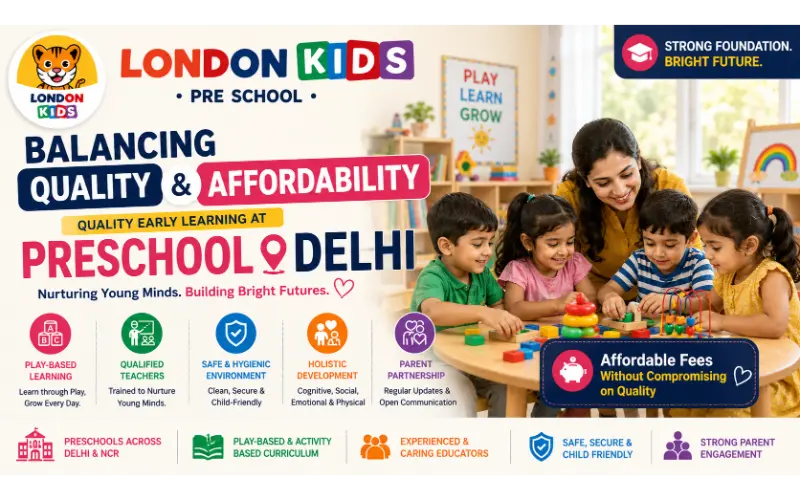
Choosing a preschool is one of the first major educational decisions parents make for their child. While every parent wants a high-quality learning environment, affordability is also an important consideration. The good news is that quality and affordability do not have to be mutually exclusive. A well-designed preschool program can provide strong early childhood education, safe learning spaces, trained teachers, and holistic development opportunities while remaining accessible to families. This balance is what many parents seek when searching for a preschool in Delhi.
Quick Answer
How Can Parents Find a Good Preschool in Delhi?
A quality preschool should offer:
- Play-based and activity-based learning
- Qualified and caring teachers
- Safe and hygienic facilities
- Strong parent communication
- Holistic child development
- Reasonable and transparent fee structures
The goal is not simply to find the cheapest option, but to find the preschool that provides the greatest educational value for your child.
Why Preschool Education Matters
The early years of life play a crucial role in shaping a child's future learning abilities. Research and educational frameworks worldwide recognize that children learn rapidly during the ages of 1.5 to 6 years.
Building Strong Foundations
Preschool education helps children develop:
- Communication skills
- Social interaction abilities
- Emotional understanding
- Problem-solving skills
- Creativity and curiosity
These foundational skills prepare children for formal schooling and lifelong learning.
NEP 2020 and Early Learning
India's National Education Policy (NEP 2020) highlights the importance of foundational learning and early childhood care. It encourages age-appropriate, activity-based, and play-oriented learning experiences that support children's overall development rather than focusing solely on academics.
What Parents Should Look for in a Preschool in Delhi
When evaluating preschool options, parents should look beyond advertisements and compare educational quality, teaching methods, and child development practices.
Child-Centered Curriculum
A strong preschool curriculum focuses on the needs and developmental stage of young children.
Look for programs that include:
- Play-based learning
- Activity-based education
- Storytelling and communication activities
- Creative arts and music
- Hands-on learning experiences
Qualified and Trained Teachers
Teachers play a critical role in creating positive learning experiences. Well-trained educators understand how children learn and can adapt activities to different learning styles and developmental needs.
Safe and Hygienic Environment
Parents should assess:
- Classroom safety measures
- Clean learning spaces
- Child-friendly furniture
- Secure entry and exit systems
- Health and hygiene practices
Parent Communication
Regular communication helps parents stay involved in their child's learning journey. Progress updates, parent-teacher meetings, and activity reports can strengthen the partnership between school and home.
Understanding Quality and Affordability
Many parents assume that higher fees automatically mean better education. However, affordability should be evaluated alongside educational value.
What Does an Affordable Preschool Mean?
An affordable preschool provides:
- Quality learning experiences
- Access to educational resources
- Trained educators
- Safe infrastructure
- Meaningful child development opportunities
without placing unnecessary financial pressure on families.
Why Lowest Fees Should Not Be the Only Factor
Choosing a preschool based solely on cost may lead parents to overlook important factors such as curriculum quality, teacher expertise, and developmental support. A balanced approach often delivers better long-term outcomes for children.
The Educational Approach at London Kids Preschool
At London Kids Preschool, the focus is on creating learning experiences that are engaging, age-appropriate, and developmentally meaningful.
EYFS-Inspired Learning Framework
The curriculum draws inspiration from globally recognized early childhood education practices while adapting to the needs of Indian learners.
Play-Based Learning
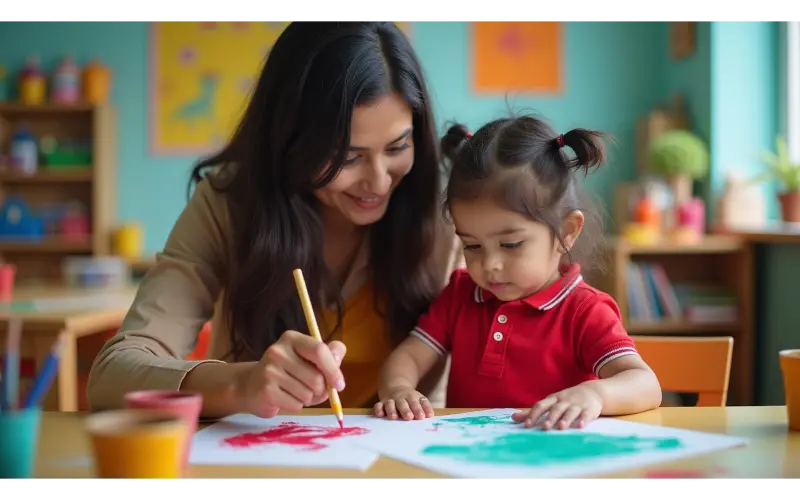
Children learn through activities, games, exploration, and hands-on experiences. Play-based learning helps make education enjoyable while supporting cognitive and social development.
Holistic Child Development
The learning approach focuses on:
- Language development
- Emotional well-being
- Social skills
- Physical development
- Creativity and imagination
Child-Friendly Learning Spaces
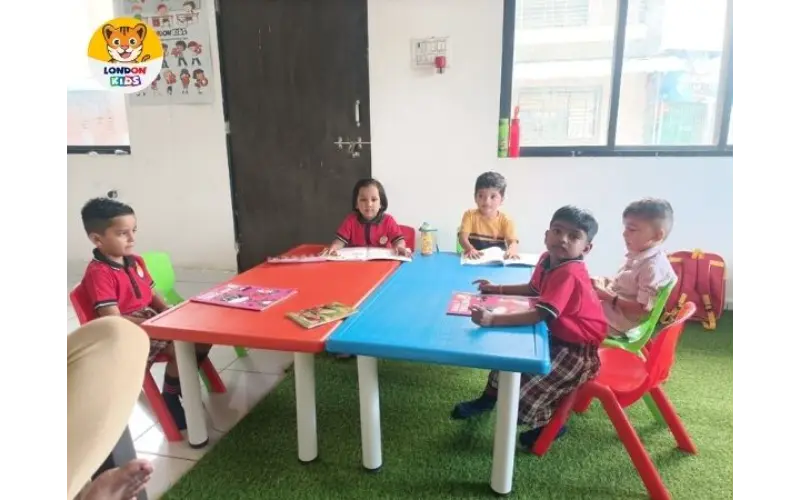
Young learners thrive in environments that encourage curiosity, interaction, and exploration. Classrooms are designed to support active participation and comfortable learning.
Educational Standards That Support Child Development
Language and Communication Skills
Children participate in storytelling, conversations, rhymes, and group discussions that strengthen listening and speaking abilities.
Early Literacy and Numeracy
Age-appropriate activities introduce children to letters, sounds, numbers, patterns, and foundational concepts.
Social and Emotional Learning
Preschool experiences help children learn cooperation, empathy, self-expression, and confidence.
Physical Development
Activities involving movement, play, crafts, and coordination support both fine and gross motor skill development.
Creativity and Imagination
Art, music, role play, and imaginative activities encourage children to express themselves and think creatively.
How Parent Involvement Strengthens Learning
Parent participation is an important aspect of early childhood education.
Benefits of strong parent-school partnerships include:
- Better understanding of child progress
- Consistent learning support at home
- Improved communication
- Stronger emotional confidence for children
When parents and educators work together, children often experience a more supportive learning environment.
Why Many Delhi Parents Prefer Structured Preschool Programs
As awareness about early childhood education grows, more families in Delhi are seeking structured preschool programs that combine learning with child development.
Parents increasingly value:
- Safe environments
- Qualified teachers
- Play-based learning
- School readiness support
- Holistic development opportunities
These factors help children transition smoothly into formal schooling while enjoying their early learning years.
Frequently Asked Questions
What is the right age to join preschool in Delhi?
Most children begin preschool between 1.5 and 3 years of age, depending on the program and their developmental readiness.
What is play-based learning?
Play-based learning uses games, activities, and exploration as tools for education, helping children learn naturally while having fun.
How do I choose a preschool for my child?
Evaluate curriculum quality, teacher training, safety measures, learning environment, and communication practices rather than focusing only on fees.
Why is teacher training important in preschool education?
Well-trained teachers understand child development and can create engaging learning experiences that support individual growth.
What should parents consider besides fees?
Parents should consider curriculum quality, teacher expertise, child safety, developmental support, and parent communication.
How does NEP 2020 influence preschool education?
NEP 2020 emphasizes foundational learning and encourages activity-based approaches that support holistic child development.
How can parents evaluate preschool quality?
Visit the campus, observe classrooms, understand the curriculum, interact with teachers, and review safety and communication practices.
Key Takeaways
Quality and affordability can coexist in preschool education.
Early childhood education builds the foundation for future learning.
Play-based learning supports holistic child development.
Teacher quality, safety, and curriculum matter more than fees alone.
Parent involvement enhances learning outcomes.
Final Thoughts
Finding the right preschool in Delhi involves balancing educational quality, child development opportunities, safety, and affordability. Parents should focus on the overall learning experience rather than simply comparing fee structures. A nurturing preschool environment can help children develop confidence, curiosity, communication skills, and a lifelong love for learning.
Families exploring preschool options can take time to understand different educational approaches and choose a learning environment that aligns with their child's developmental needs and future goals.